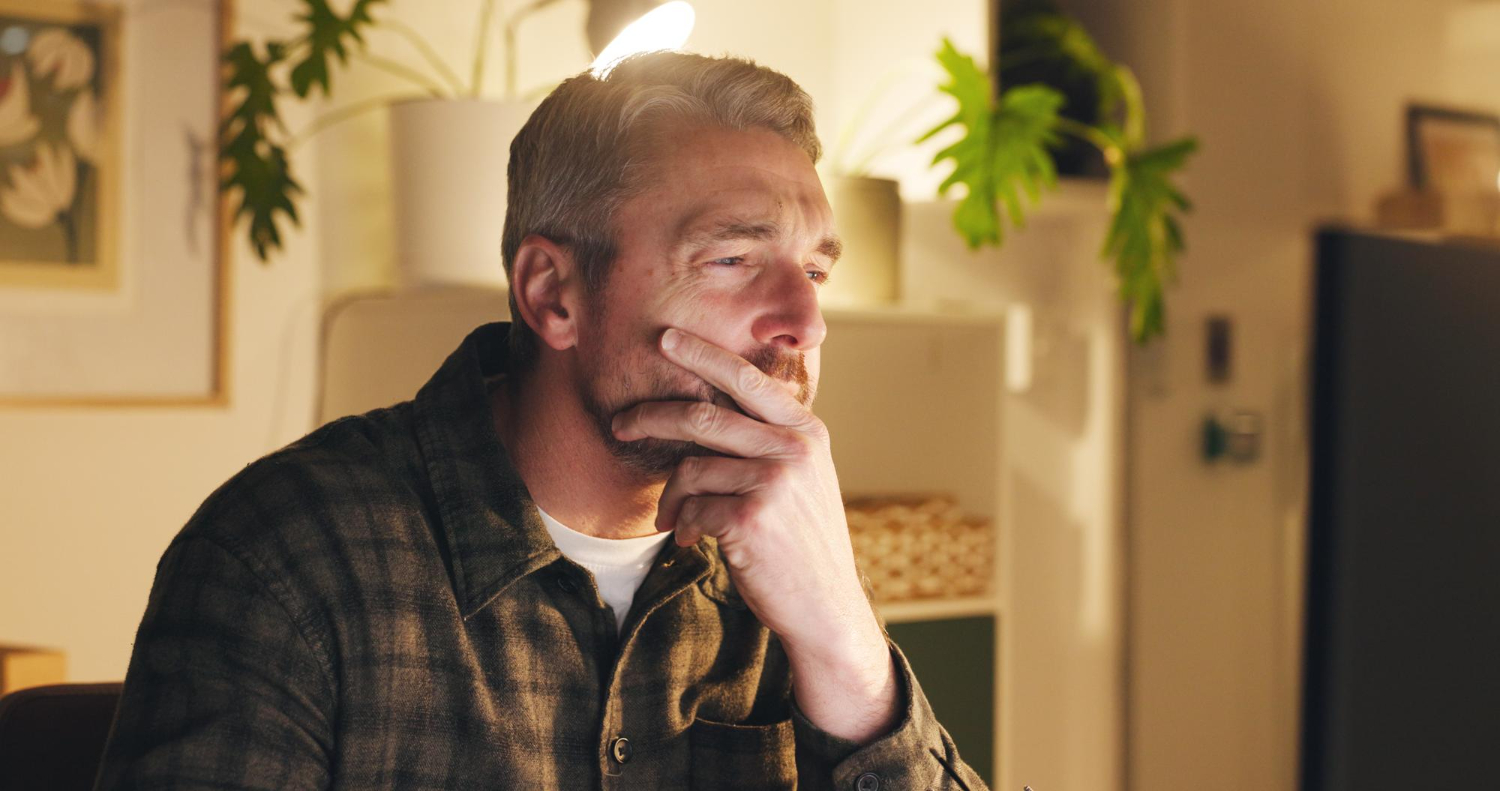
Most adults who live with anxiety don’t think of themselves as anxious. They think of themselves as busy, stressed, or just “the kind of person who worries a lot.” For years — sometimes decades — anxiety quietly shapes the way they work, love, sleep, and move through the world. It doesn’t have to be that way. At Therapy In Motion in Cornwall, NY, we help adults recognize what’s really going on and build a path forward.
Anxiety in Adults: More Common Than You Think
Anxiety is the most common mental health condition in the United States, affecting tens of millions of adults. Yet a significant number of people with anxiety never receive any treatment — partly because anxiety in adults is remarkably good at disguising itself as something else: perfectionism, productivity, sarcasm, control, or simply “how I’ve always been.”
The truth is that anxiety doesn’t always look like panic attacks or visible nervousness. In adults, it often presents in subtler, more socially acceptable forms — forms that are easy to rationalize and hard to recognize as a clinical issue that deserves real attention and care.
What Does Adult Anxiety Actually Look Like?
Adult anxiety wears many faces. Here are some of the signs that are most frequently overlooked:
You’re Always “On” — and Can’t Switch Off
You carry a mental to-do list everywhere. Even during downtime — watching TV, eating dinner, trying to fall asleep — your brain is scanning for problems, replaying conversations, or preparing for scenarios that may never happen. Relaxation feels foreign, even suspicious. Rest feels like falling behind.
You Catastrophize Without Realizing It
A minor problem at work becomes a sign you’re about to be fired. A short text response from a friend means something is wrong in the relationship. A headache means something serious is happening medically. Anxiety has a way of taking small, uncertain situations and fast-forwarding to worst-case scenarios — often so automatically that you don’t notice it’s happening.
Physical Symptoms With No Clear Medical Cause
Chronic tension headaches. A tight chest. An upset stomach that flares before meetings or social events. Trouble falling or staying asleep. Jaw clenching. Fatigue that sleep doesn’t fix. Anxiety lives in the body as much as in the mind, and many adults spend years treating the physical symptoms without ever addressing the anxiety underneath.
You Avoid More Than You Realize
Avoidance is anxiety’s most powerful coping strategy — and the one that keeps it alive. You might decline social invitations, put off difficult conversations, avoid driving on certain roads, or find reasons not to pursue things you actually want. Each avoidance provides short-term relief and long-term reinforcement of the anxiety.
Irritability and Difficulty Tolerating Uncertainty
Anxiety often presents as irritability, especially in adults. When you’re running on a constant low hum of internal tension, small frustrations feel enormous. You may also notice a strong need for control, predictability, and reassurance — discomfort with any situation where the outcome is unknown.
You’ve Just Accepted It as Normal
Perhaps the most common — and most heartbreaking — sign of long-standing adult anxiety is the belief that this is simply how life feels. “Everyone feels this way.” “This is just what being an adult is like.” “I’ve always been a worrier.” When anxiety has been present since childhood or adolescence, it can feel like a personality trait rather than a condition that has real, effective treatments.
The Difference Between Stress and an Anxiety Disorder
Stress is a response to a specific external pressure — a deadline, a conflict, a difficult season of life. It typically eases when the stressor resolves. Anxiety is different. It persists even when circumstances are objectively fine. It attaches to new worries as old ones resolve. It doesn’t require a reason.
Some common anxiety disorders in adults include:
- Generalized Anxiety Disorder (GAD) — persistent, wide-ranging worry that is difficult to control
- Social Anxiety Disorder — intense fear of judgment, embarrassment, or scrutiny in social situations
- Panic Disorder — recurring panic attacks accompanied by fear of future episodes
- Health Anxiety — excessive preoccupation with having or developing a serious illness
- PTSD and Trauma-Related Anxiety — anxiety rooted in past traumatic experiences
A diagnosis isn’t required to benefit from therapy. But understanding that what you’re experiencing has a name — and a treatment — can itself be profoundly relieving.
Why Adults Wait — and Why That’s Understandable
There are very real reasons why adults delay seeking help for anxiety. Some of the most common ones we hear at Therapy In Motion:
- “I should be able to handle this on my own.”
- “Things aren’t bad enough to need therapy.”
- “I don’t have time.”
- “I’ve felt this way my whole life — it’s just who I am.”
- “What would people think?”
Every one of these feelings is valid and completely understandable. And none of them need to stand between you and a better quality of life. Seeking support isn’t weakness — it’s the kind of practical, courageous decision that genuinely changes things.
How Therapy Helps Adults With Anxiety
Therapy for adult anxiety isn’t about being told to “just relax” or recounting your childhood for months before anything changes. Modern, evidence-based approaches are practical, skills-focused, and show results. Here’s what the process looks like at Therapy In Motion:
- Getting a clear picture. Your therapist will take time to understand how anxiety shows up in your specific life — your patterns, triggers, history, and what you want to be different.
- Cognitive tools. We work on identifying the thought patterns that drive anxiety — catastrophizing, black-and-white thinking, overestimating threat — and gently challenging them with more accurate, balanced perspectives.
- Behavioral strategies. We address avoidance, build tolerance for uncertainty, and help you gradually re-engage with the parts of life anxiety has been limiting.
- Body-based regulation skills. Since anxiety lives in the nervous system, we incorporate techniques — grounding, breathwork, mindfulness — that calm the physical experience of anxiety in real time.
- Building a sustainable life. Ultimately, the goal isn’t to eliminate all anxiety (a normal human emotion) but to reduce it to a manageable level that no longer runs your life.
Sessions at Therapy In Motion are available in-office, via telehealth, or outdoors — because we know that adults have full lives, and flexibility matters. Whether you’re in Cornwall, Newburgh, Monroe, or anywhere in Orange County, we can find an option that works for your schedule.
5 Things You Can Do Right Now to Support Your Mental Health
While therapy is the most effective tool for anxiety, here are some evidence-supported habits that can complement your care or help you take the first steps:
- Name it. Simply labeling an emotion (“I’m feeling anxious right now”) activates the prefrontal cortex and reduces the intensity of the emotional experience. It sounds simple — it genuinely works.
- Move your body. Physical exercise is one of the most reliably effective anxiety-reducers available. Even a 20-minute walk can meaningfully shift your nervous system state.
- Limit your news and social media intake. Set specific times to check in, rather than constant scrolling. Your brain was not designed for an unending stream of threatening information.
- Practice “scheduled worry.” Set a specific 15-minute window each day for worrying. When anxious thoughts arise outside that window, remind yourself you’ll address them later. This simple technique reduces the all-day sprawl of anxious thinking.
- Reach out. Connection is one of the most powerful buffers against anxiety. A conversation with a trusted friend — or a first call to a therapist — can shift things more than you might expect.
You Don’t Have to Feel This Way Forever
If any part of this post felt familiar, we’d love to talk. The compassionate team at Therapy In Motion serves adults of all ages in Cornwall, Newburgh, and throughout the Hudson Valley — in person, outdoors, or via telehealth.
📍 16 Quaker Avenue, Cornwall, NY 12518
📞 845-288-2672
🌐 Request an Appointment →
Therapy In Motion LLC is a psychotherapy practice in Cornwall, NY offering individual, family, and group therapy for adolescents and adults. Services include anxiety treatment, depression therapy, ecotherapy, telehealth, in-office sessions, grief counseling, and DWI/DWAI evaluations. Contact us to schedule a consultation.